
 sign up
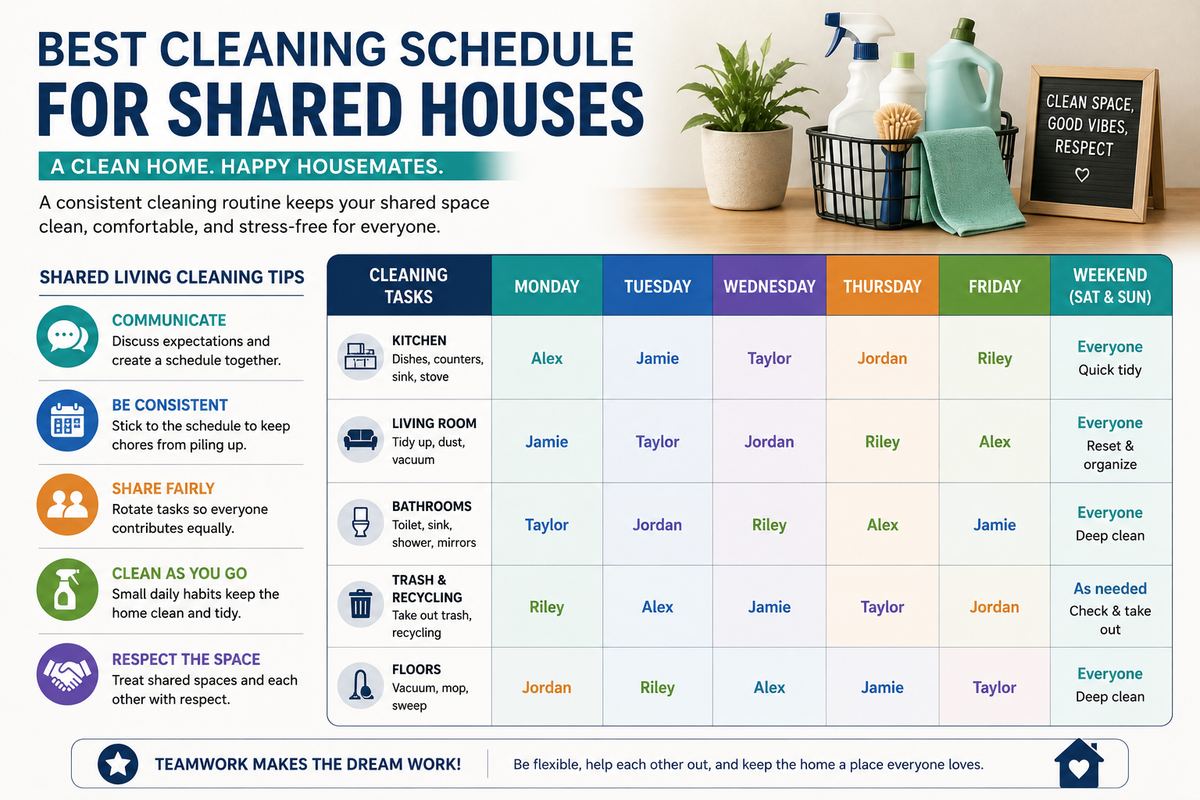
Best Cleaning Schedule For Shared Houses | Shared Living Cleaning Tips | Setli

Jun 07, 2026

5 min read
Living in a shared house can be fun, affordable, and social.
But it can also become stressful when nobody knows whose turn it is to clean the kitchen, take the bins out, or tidy the shared spaces.
Cleaning disagreements are one of the most common causes of frustration in shared living arrangements.
Without a clear system, small issues can quickly build up and create tension between housemates.
The good news is that a simple and organised cleaning schedule can make shared living much easier, fairer, and more comfortable for everyone.
Why Cleaning Problems Happen In Shared Houses
Most cleaning issues are not caused by people intentionally refusing to help.
In many cases, the problem comes from unclear expectations and poor organisation.
Common causes include:
- unclear responsibilities
- poor communication
- inconsistent routines
- forgotten tasks
- uneven workloads
- different cleaning standards
- no clear reminder system
When expectations are not clear, frustration can build over time.
One housemate may feel like they are doing more than everyone else, while another may not even realise there is a problem.
A clear cleaning schedule helps avoid this confusion.
Why Cleaning Schedules Matter
A proper cleaning schedule helps create structure in the household.
It gives everyone a better understanding of what needs to be done, when it needs to be done, and who is responsible.
A good cleaning schedule can help with:
- clear expectations
- shared responsibility
- accountability
- fairness
- better communication
- a cleaner household environment
- fewer awkward conversations
Instead of constantly asking whose turn it is to clean, everyone can follow the same system.
This makes shared living feel more organised and less stressful.
The Best Cleaning Schedule Structure For Shared Houses
The best cleaning schedules are simple, consistent, visible to everyone, and easy to follow.
Complicated systems often fail because nobody wants to manage a full-time cleaning spreadsheet.
A good shared house cleaning schedule should usually include daily tasks, weekly tasks, and monthly tasks.
This keeps the house manageable without making cleaning feel overwhelming.
Daily Shared Tasks
Small daily habits help prevent bigger cleaning problems later.
Daily tasks are usually simple jobs that everyone should help with as part of living in the house.
Common daily responsibilities include:
- washing dishes
- wiping kitchen benches
- cleaning spills
- removing rubbish when needed
- putting away shared items
- keeping common areas tidy
- wiping the stove after use
These small habits make a big difference.
When everyone handles small messes straight away, the household stays much easier to manage.
Weekly Cleaning Tasks
Weekly cleaning tasks help divide larger responsibilities fairly between housemates.
These are the jobs that usually need to be done regularly but not every day.
Typical weekly tasks may include:
- vacuuming
- mopping floors
- cleaning bathrooms
- taking bins out
- cleaning shared areas
- kitchen deep cleaning
- wiping surfaces
- cleaning mirrors
- emptying shared rubbish areas
Many shared houses rotate these responsibilities between housemates each week.
For example, one person may clean the bathroom this week while another handles the kitchen. The following week, the jobs rotate.
This helps keep the workload fair and avoids one person always being stuck with the same task.
Monthly Household Tasks
Some cleaning tasks do not need to happen every week, but they should still be scheduled.
Monthly tasks help stop bigger household jobs from being forgotten.
Examples include:
- cleaning the fridge
- organising the pantry
- cleaning outdoor areas
- cleaning appliances
- sorting shared storage
- wiping windows or glass doors
- checking expired food
- deep cleaning common areas
These jobs are easy to ignore if they are not written down.
Adding them to a shared schedule makes it easier to keep the household organised long-term.
Use Visible Cleaning Reminders
One of the easiest ways to improve cleaning consistency is to keep responsibilities visible.
If nobody can see the schedule, it is much easier for tasks to be forgotten.
Shared houses can use:
- shared calendars
- cleaning rosters
- household reminder systems
- digital notifications
- shared task lists
- weekly household check-ins
Clear visibility helps avoid confusion and keeps everyone accountable.
It also makes cleaning feel less personal because the schedule is doing the reminding, not one housemate constantly chasing everyone.
Keep Cleaning Expectations Realistic
Shared living does not require perfection.
The goal is not to create strict rules that make the house uncomfortable.
The goal is to create a household where everyone contributes fairly, communicates respectfully, and understands their responsibilities.
Simple systems usually work better than overly complicated rules.
A cleaning schedule should be easy enough that people actually follow it.
If the system becomes too strict or too detailed, housemates may ignore it altogether.
Talk About Problems Early
If cleaning problems start appearing, it is better to raise them early and calmly.
Small issues can become bigger frustrations when nobody talks about them.
A simple conversation can help reset expectations before tension builds.
It may help to discuss:
- whether the current roster is fair
- whether tasks are being missed
- whether the schedule needs changing
- whether some jobs need clearer responsibility
- whether reminders would help
Good communication is just as important as the cleaning schedule itself.
Why Shared Living Organisation Is Becoming More Important
As more people move into shared housing arrangements, household organisation tools are becoming more useful.
Shared houses often involve multiple people, different schedules, shared bills, rent payments, maintenance requests, chores, and household responsibilities.
People increasingly expect:
- shared calendars
- reminders
- organised household management
- clearer communication
- easier responsibility tracking
- better visibility over shared tasks
Digital tools are helping reduce confusion and improve the shared living experience.
How Setli Helps Simplify Shared Living
Setli is being developed to help simplify rental and shared living management.
The platform is designed to support:
- shared household organisation
- reminders
- rent tracking
- bill splitting
- payment management
- household scheduling
- maintenance tracking
- clearer communication between tenants and hosts
Setli’s goal is to reduce stress, improve transparency, and make shared living easier for everyone involved.
By keeping important household tasks more organised, shared living can become less chaotic and more manageable.
Final Thoughts
A good cleaning schedule does not need to be complicated.
Simple routines, clear responsibilities, and consistent communication can dramatically improve the shared living experience.
The easier it becomes to organise household responsibilities, the less tension and frustration builds within the home.
Shared living works best when everyone understands what needs to be done and contributes fairly.
With a clear cleaning schedule, shared houses can stay cleaner, calmer, and easier to manage.