 sign up
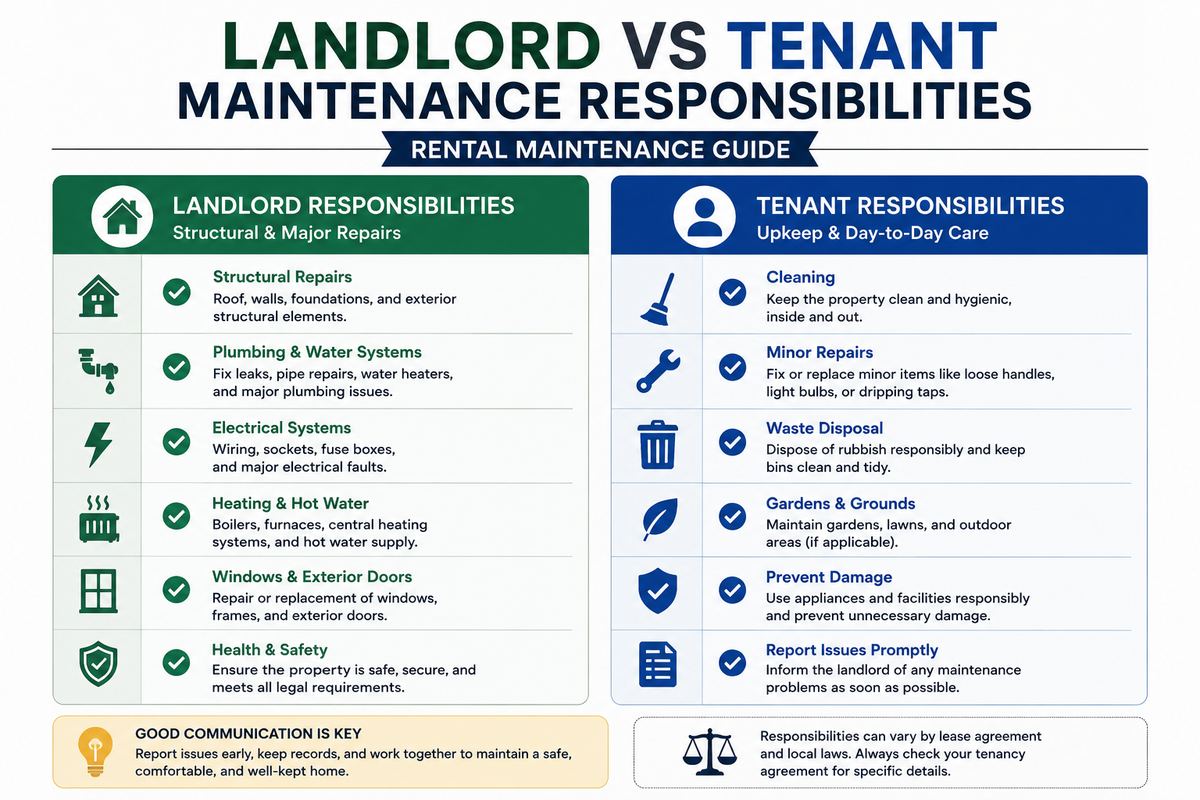
Landlord vs Tenant Maintenance Responsibilities | Rental Maintenance Guide | Setli

Jun 07, 2026

4 min read
Maintenance responsibilities are one of the most common areas of confusion in rental properties and shared living arrangements.
Many disputes happen because tenants, landlords, and hosts are unsure who is responsible for certain repairs, damages, or household maintenance.
Clear communication and organised maintenance tracking can help reduce misunderstandings and create a smoother rental experience for everyone involved.
Why Maintenance Responsibilities Matter
When maintenance responsibilities are unclear, small issues can quickly become frustrating disputes.
Common areas of confusion include:
- appliance repairs
- accidental damage
- plumbing problems
- cleaning responsibilities
- general wear and tear
- shared household maintenance
- damage in common areas
Understanding responsibilities early helps reduce tension between tenants, landlords, hosts, and property managers.
It also helps ensure maintenance issues are reported, tracked, and resolved properly.
Common Landlord Maintenance Responsibilities
In most rental arrangements, landlords are generally responsible for keeping the property safe, functional, and reasonably maintained.
This commonly includes:
- structural repairs
- plumbing systems
- electrical systems
- major appliance repairs
- water leaks
- heating and cooling systems
- safety-related maintenance
- repairs caused by normal wear and tear
Landlords are also generally responsible for addressing maintenance issues that occur naturally over time through regular use of the property.
For example, if a hot water system fails due to age, that would usually fall under the landlord’s responsibility.
Common Tenant Maintenance Responsibilities
Tenants are generally responsible for looking after the property during their tenancy and keeping it reasonably clean.
This commonly includes:
- basic cleaning
- reporting maintenance issues early
- avoiding intentional or careless damage
- replacing minor consumables where required
- keeping shared areas reasonably maintained
- using appliances and fixtures properly
Tenants also play an important role in preventing bigger problems.
If an issue is ignored for too long, a small repair can turn into a larger and more expensive problem.
Why Reporting Maintenance Early Is Important
One of the biggest mistakes tenants can make is waiting too long before reporting maintenance problems.
Small issues can quickly become:
- expensive repairs
- larger property damage
- safety hazards
- household disruptions
- disputes over responsibility
Early communication helps protect both the property and the rental relationship.
It also gives landlords, hosts, or property managers a better chance to organise repairs before the issue becomes worse.
Shared Living Adds Extra Complexity
In shared houses, maintenance responsibilities can become even more confusing.
Questions often come up around:
- shared damage
- cleaning responsibilities
- common area maintenance
- appliance usage
- household organisation
- who reported the issue
- who may have caused the damage
This is why clear communication and organised maintenance tracking are especially important in shared living environments.
When multiple people live in the same property, it becomes easier for maintenance issues to be missed, delayed, or blamed on the wrong person.
Keep Maintenance Requests Organised
Many households still manage maintenance requests manually through text messages, screenshots, group chats, verbal conversations, and scattered emails.
Over time, this can create confusion around:
- what was reported
- when it was reported
- who reported it
- repair progress
- completed maintenance
- ongoing issues
Organised maintenance systems improve visibility and reduce misunderstandings.
When maintenance requests are tracked clearly, tenants and hosts can better understand what has been raised, what is being worked on, and what has already been resolved.
Why Digital Maintenance Tracking Is Becoming More Important
Rental management is becoming more digital.
Tenants, landlords, hosts, and property managers increasingly expect organised maintenance requests, repair status visibility, digital communication, maintenance history, and simplified property management.
Digital maintenance tracking helps reduce scattered messages and keeps important repair information easier to find.
It also creates a clearer record of maintenance activity over time.
How Setli Helps Simplify Maintenance Management
Setli is being developed to help simplify rental and shared living management.
The platform is designed to support:
- maintenance request tracking
- repair status updates
- communication visibility
- maintenance history
- household organisation
- rent tracking
- rental management
Setli’s goal is to improve transparency, reduce confusion, and make shared living easier for everyone involved.
Final Thoughts
Clear maintenance responsibilities help create better rental experiences for both tenants and landlords.
The easier it becomes to communicate, track repairs, and organise maintenance requests, the less stress and confusion exists within the household.
Good maintenance systems benefit everyone involved in the rental process by improving visibility, reducing disputes, and making property management easier.