
 sign up
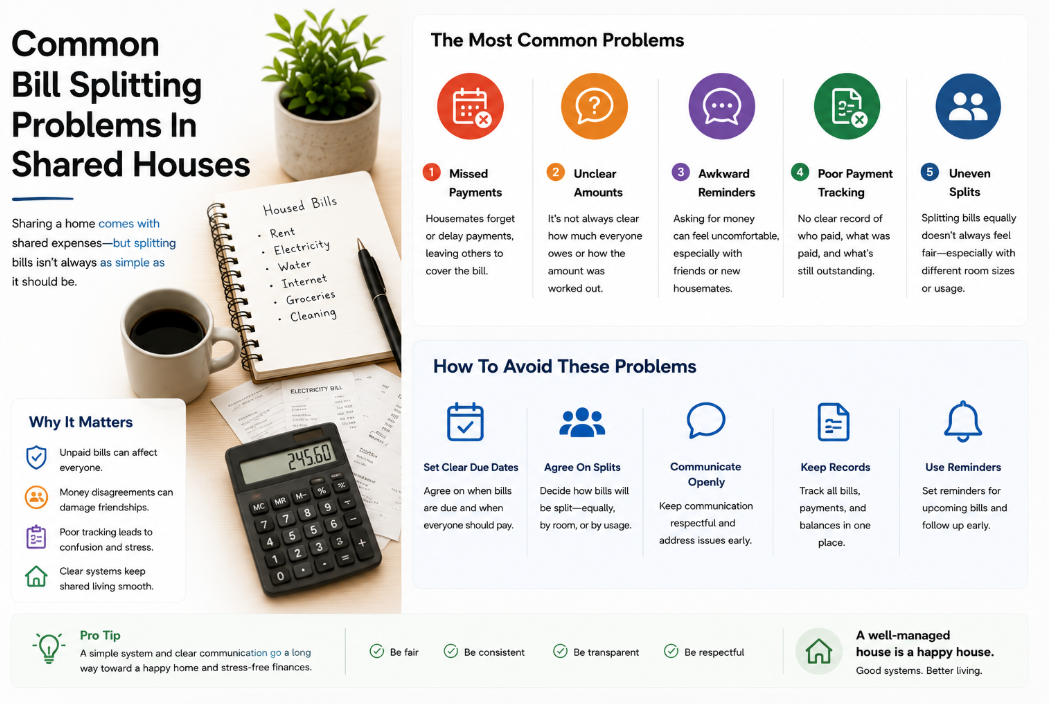
Common Bill Splitting Problems In Shared Houses | Setli

Jun 27, 2026

6 min read
Splitting bills in a shared house sounds simple.
Everyone agrees to pay their share, the bills arrive, and each person contributes what they owe.
But in real life, shared house bills can quickly become messy.
People forget.
Amounts change.
One housemate pays upfront.
Another says they will transfer later.
Someone moves in halfway through the month.
Someone else forgets what they already paid.
Small issues can easily turn into awkward conversations or arguments.
That is why shared houses need clear systems for managing bills and expenses.
Why Bill Splitting Gets Messy
Most bill splitting problems happen because there is no clear process.
Many shared houses rely on:
group chats
screenshots
verbal reminders
bank transfers
notes apps
spreadsheets
mental tracking
This can work for a short time.
But over weeks and months, it becomes harder to remember who paid, who still owes money, and what each person is responsible for.
The more housemates involved, the easier it is for confusion to build.
1. Unclear Bill Amounts
One common problem is not knowing exactly how much each person owes.
This can happen when bills include:
electricity
water
gas
internet
streaming services
household supplies
shared subscriptions
maintenance costs
If the bill is not split clearly, housemates may disagree about the amount.
Some people may think the bill should be split equally.
Others may think it should be split based on room size, usage, or how long someone lived there.
Clear expectations help prevent confusion.
2. One Person Paying Everything Upfront
In many shared houses, one person ends up paying the full bill first.
Then they have to chase everyone else for their share.
This can create stress because the person who paid upfront is out of pocket until everyone pays them back.
It can also create awkward reminders if people are slow to transfer money.
Over time, this can become frustrating and unfair.
A better system should make it clear who owes what and when each payment is due.
3. Missed Or Late Payments
Late bill payments are another common problem.
Sometimes people forget.
Sometimes they are waiting for payday.
Sometimes they do not see the message in the group chat.
Whatever the reason, missed payments can create tension in the household.
This is especially frustrating when one person has already covered the full cost.
Clear due dates and reminders can help reduce missed payments.
4. Different Payment Dates
Bills do not always arrive at convenient times.
Electricity may be due one week.
Internet may be due another week.
Rent may be due on a different date.
A shared expense may come up unexpectedly.
When payment dates are scattered, it becomes harder for everyone to stay organised.
Housemates may forget which bill is due, when it is due, and who has already paid.
This is why tracking bills in one place can make shared living easier.
5. Housemates Moving In Or Out
Bill splitting becomes more complicated when someone moves in or out during a billing period.
For example:
someone moves in halfway through the month
someone leaves before the bill arrives
a tenant changes rooms
a new housemate joins after the expense was created
someone owes only part of the bill
Without clear records, it can be hard to work out what is fair.
This is why shared houses should keep records of dates, amounts, and payment responsibilities.
6. No Clear Payment History
Payment history matters.
If there is no clear record, people may disagree about whether a bill has been paid.
This can lead to conversations like:
“I already paid that.”
“I thought I transferred it.”
“Was that for electricity or internet?”
“Did I pay last month’s bill?”
These conversations are common when payments are tracked manually.
A clear payment history helps reduce confusion and gives everyone better visibility.
7. Awkward Reminders
Chasing money can feel uncomfortable.
Many people do not enjoy reminding housemates to pay bills.
It can feel personal, even when it is just a normal household responsibility.
This is one of the biggest reasons shared expenses become stressful.
A reminder system can help take some of the awkwardness out of the process.
Instead of one person constantly chasing, the household can rely on clearer due dates and automatic reminders.
8. Different Views On What Is Fair
Not every household agrees on what “fair” means.
Some bills may be split equally.
Others may be split based on usage, room size, or household agreement.
For example:
a couple may share one room
one person may work from home
one room may have an ensuite
someone may use more utilities
some bills may only apply to certain people
The important thing is not that every household uses the same method.
The important thing is that everyone agrees on the method before problems happen.
Why Clear Systems Matter
Shared houses work better when everyone understands the rules.
This includes:
what bills are shared
how bills are split
when payments are due
who is responsible for paying
how reminders are handled
where payment records are kept
Clear systems reduce confusion.
They also make it easier to manage problems if someone forgets or pays late.
How Setli Helps With Shared Bills
Setli is designed to help with rent, bills, shared expenses, reminders, payment history, and household payment tracking.
For shared houses, Setli can help make bill management clearer by keeping important payment information in one place.
Hosts can track expenses, create payment requests, manage reminders, and keep records.
Tenants can see what is due, when it is due, and what has already been paid.
The goal is to reduce confusion and make shared living easier to manage.
Why Shared Bill Tracking Is Important
Shared bills are not always large individually.
But over time, they add up.
Electricity, water, internet, subscriptions, household supplies, and other expenses can create ongoing admin for a shared house.
If there is no clear system, small bills can become repeated problems.
Better tracking helps everyone stay on the same page.
Final Thoughts
Bill splitting problems are common in shared houses.
Unclear amounts, late payments, awkward reminders, changing housemates, and poor payment records can all create stress.
The best way to avoid these issues is to use clear systems from the start.
Everyone should understand how bills are split, when payments are due, and where payment history is recorded.
Setli helps simplify this process by giving shared households a clearer way to manage rent, bills, reminders, payment tracking, and shared expenses.