
 sign up
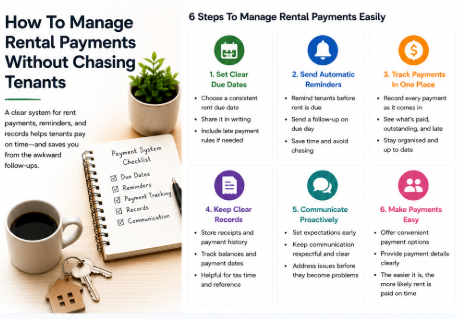
How To Manage Rental Payments Without Chasing Tenants | Setli

Jun 27, 2026

6 min read
Chasing rent is one of the most frustrating parts of managing a rental property.
Most landlords and hosts do not want to constantly remind tenants to pay.
Tenants usually do not want awkward messages either.
But when rent payments are managed manually, chasing can become part of the routine.
A payment is missed.
A reminder needs to be sent.
A bank account needs to be checked.
A tenant says they already paid.
The landlord then has to confirm the amount, date, and payment status.
Over time, this can become stressful for everyone.
Why Rent Chasing Happens
Rent chasing usually happens when there is no clear system.
This may include:
unclear due dates
manual bank transfers
forgotten reminders
missing payment records
different payment schedules
no automatic visibility
confusion over paid and unpaid rent
Even good tenants can forget.
Even organised landlords can miss something.
The goal is not to blame either side.
The goal is to make the rent process clearer.
Set Clear Rent Due Dates
Every rental arrangement should have a clear rent due date.
This may be weekly, fortnightly, monthly, or based on another agreement.
The due date should be easy for both sides to understand.
Clear due dates help avoid confusion around:
when rent is expected
which period the rent covers
whether rent is upcoming
whether rent is overdue
when reminders should be sent
If the due date is unclear, rent chasing becomes more likely.
Use Payment Reminders
Reminders are one of the simplest ways to reduce rent chasing.
Many missed payments are not intentional.
People get busy.
Messages get missed.
Paydays may not line up perfectly.
A reminder before the rent is due can help tenants stay aware without the landlord needing to manually follow up each time.
Reminders can help with:
upcoming rent
overdue rent
changed due dates
payment extensions
future payment schedules
This makes the process feel less personal and more organised.
Track Payment Status Clearly
Landlords should be able to see whether rent has been paid, unpaid, or overdue.
Without clear payment status, they may need to check bank statements, messages, screenshots, or spreadsheets.
This can become time-consuming.
Clear payment tracking helps answer:
who has paid?
who has not paid?
when was the payment made?
what amount was paid?
which rent period does it cover?
is anything still outstanding?
When this information is easy to see, there is less need for manual chasing.
Keep Payment History
Payment history is important for both landlords and tenants.
It creates a record of what has happened over time.
This may include:
completed payments
late payments
missed payments
rent periods
payment dates
amounts paid
outstanding amounts
Payment history helps reduce disputes.
It also gives tenants clearer records of their rental payments.
This can be useful for people who rent rooms, live in shared houses, or pay private hosts.
Avoid Relying Only On Bank Transfers
Bank transfers are common, but they do not always create a complete rental record.
A bank transfer may show that money moved, but it may not clearly show:
which rent period it covered
whether it was late
whether the full amount was paid
whether any bills were included
whether another payment is still due
This is why rent tracking needs more than just a bank statement.
A clear system should connect payments to rent schedules and records.
Make Tenant Communication Easier
Rent reminders can feel awkward when they are sent manually.
A landlord may not want to sound harsh.
A tenant may feel embarrassed or defensive.
Using a clearer system can make communication easier because the reminder is connected to the payment schedule, not a personal confrontation.
Instead of repeated manual messages, both sides can see what is due and when.
This helps reduce tension.
Manage Different Payment Frequencies
Not every tenant pays rent on the same schedule.
Some may pay weekly.
Others may pay fortnightly or monthly.
In shared properties, different rooms may have different rent amounts or start dates.
This can make manual rent tracking difficult.
A landlord may need to track:
different rent cycles
different rent amounts
different due dates
new tenant start dates
move-out dates
payment changes
A clear system helps manage these details more easily.
Handle Overdue Rent Properly
When rent becomes overdue, it should be recorded clearly.
This helps both sides understand the situation.
An overdue record should show:
the tenant
the amount overdue
the due date
the rent period
any reminders sent
whether payment has since been made
Clear records are important if the issue needs to be discussed later.
They also help avoid confusion around whether rent was actually missed or simply delayed.
Make It Easy For Tenants To See What Is Due
Tenants should not need to guess what they owe.
They should be able to see:
upcoming rent
outstanding rent
payment history
due dates
bill requests
shared expenses
records and receipts
When tenants have clear visibility, they are less likely to miss payments or misunderstand amounts.
Good payment visibility helps both sides.
How Setli Helps Reduce Rent Chasing
Setli is designed to help with rent, bills, shared expenses, reminders, payment history, and household payment tracking.
For landlords and hosts, Setli helps make rental payments clearer by showing what is due, what has been paid, and what remains outstanding.
Tenants can receive reminders, view payment requests, track payment history, and see upcoming rent.
This helps reduce the need for landlords to manually chase every payment.
Why Automation Helps
Automation can make rental management less stressful.
Instead of relying on memory, manual messages, and bank statement checks, a system can help keep the process moving.
Automation can help with:
rent reminders
payment tracking
bill reminders
upcoming due dates
overdue visibility
payment history
tenant records
The goal is not to remove communication completely.
The goal is to reduce unnecessary chasing and make the process clearer.
Keep It Simple
Managing rental payments does not need to be complicated.
The important parts are:
clear due dates
clear payment amounts
clear reminders
clear payment status
clear records
clear tenant visibility
When these basics are organised, landlords spend less time chasing and tenants have a better understanding of what is expected.
Final Thoughts
Chasing rent can be stressful for landlords and awkward for tenants.
Most payment problems become worse when due dates, reminders, and records are unclear.
A better system helps everyone understand what is due, what has been paid, and what remains outstanding.
Setli helps landlords, hosts, tenants, and shared households manage rent, bills, reminders, payment tracking, and payment history in one place.
With clearer records and reminders, rental payments can become easier to manage without constant manual chasing.