 sign up
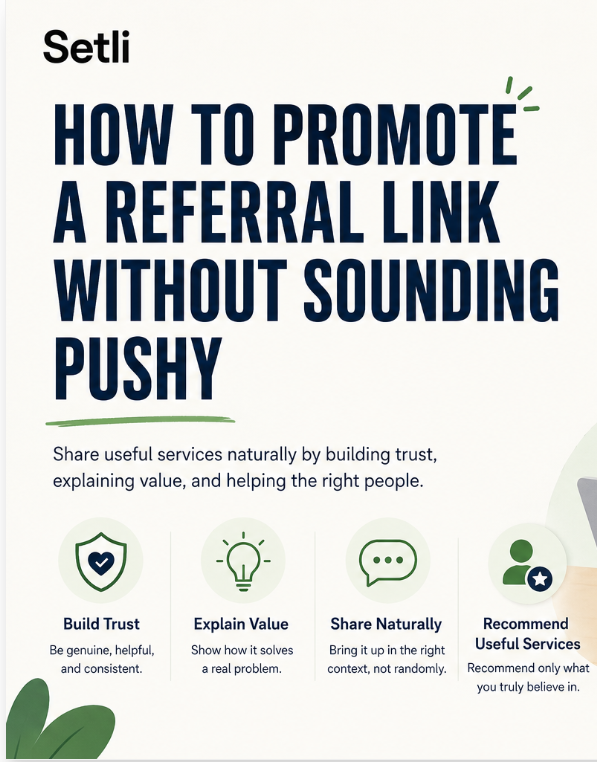
How To Promote A Referral Link Without Sounding Pushy | Setli

Jun 27, 2026

6 min read
Sharing a referral link can feel awkward.
Most people do not want to sound pushy, spammy, or like they are only trying to make money from their friends.
That is understandable.
The best referral income usually does not come from forcing links in front of people.
It comes from sharing something useful with people who may actually need it.
When a referral link is connected to a real problem, it feels less like promotion and more like a helpful recommendation.
Why People Dislike Pushy Referrals
People are used to seeing ads, promotions, and random links online.
Because of this, many people ignore anything that feels too sales-focused.
A referral link can feel pushy when it is shared without context.
This may happen when someone:
posts the same link everywhere
does not explain what the product does
shares it with people who do not need it
only talks about earning rewards
uses pressure or hype
makes unrealistic claims
Good referrals work differently.
They focus on the person’s problem first.
Start With The Problem
Before sharing a referral link, think about the problem the product solves.
A useful referral should answer a simple question.
Why would this help someone?
For example, people may need help with:
saving time
tracking payments
organising bills
reducing admin
managing reminders
keeping records
simplifying shared responsibilities
When you start with the problem, the referral feels more natural.
Instead of saying “use my link,” you are explaining why the service may be useful.
Share With The Right People
Not everyone will be the right fit for every referral program.
Sharing a link with the wrong audience can make it feel annoying.
The best referrals are usually shared with people who already understand the problem.
This may include:
friends with a relevant need
family members dealing with the issue
people in a focused community
social media followers interested in the topic
local groups where the problem comes up
people already asking for help
A smaller relevant audience is often better than a large random audience.
Explain The Benefit Clearly
People should be able to understand the benefit quickly.
A referral message should be simple and clear.
Avoid making it too complicated.
A good explanation may include:
what the product does
who it helps
why it may be useful
how it solves the problem
what makes it easy to try
The goal is not to overwhelm people.
The goal is to make the value easy to understand.
Be Honest About The Referral Reward
It is usually better to be transparent.
If you may earn a reward from a referral, being honest can help build trust.
A simple line can be enough.
For example:
“I may receive a referral reward if you sign up and use it.”
This keeps the message clear and avoids making people feel misled.
Honesty is better for long-term trust.
Do Not Oversell It
Referral income should not be promoted with unrealistic promises.
Avoid saying things like:
guaranteed income
easy money
get rich quickly
everyone needs this
you will definitely earn
These claims can make the referral feel untrustworthy.
A better approach is to keep the message practical.
Explain what the product does, who it may help, and why you are sharing it.
Use Helpful Content
Content can make referral sharing feel more natural.
Instead of only posting a link, you can create helpful content around the problem.
This may include:
tips
guides
examples
short videos
simple explanations
common mistakes
personal experiences
useful checklists
If the content helps people first, the referral link becomes part of the solution.
This is much better than posting a random link with no explanation.
Share In The Right Places
Where you share a referral link matters.
Some places may be suitable.
Others may not be.
Referral links may work better in:
relevant Facebook groups
personal social media posts
rental or community pages
side hustle groups
budgeting communities
direct conversations
helpful blog content
short videos with context
They usually work poorly when they are spammed into unrelated places.
The more relevant the space, the more natural the referral feels.
Keep The Message Human
A referral message should sound like a real person wrote it.
Avoid over-polished or aggressive sales language.
Simple wording usually works better.
For example:
“I found this useful for tracking rent and bills.”
“Could be handy if you are managing housemates.”
“This might help if you are tired of chasing payments.”
“Worth looking at if you rent rooms or split bills.”
These types of messages feel natural because they are connected to real situations.
How Setli Fits Into This
Setli is designed to help with rent, bills, shared expenses, reminders, payment history, and household payment tracking.
For people who know landlords, hosts, tenants, housemates, students, families, or shared households, Setli may be a useful platform to share.
Setli’s referral system allows people to earn rewards when they introduce others to the platform and those users continue using Setli.
This means the best way to share Setli is not by pushing a link randomly.
It is by explaining who Setli helps and why it may be useful.
Good Ways To Share Setli
Setli may be worth sharing when someone is dealing with:
rent reminders
shared bills
housemate payments
private rentals
renting out rooms
payment tracking
household expenses
rental history
awkward payment follow-ups
In these situations, Setli is connected to a real problem.
That makes the referral more helpful and easier to explain.
Example Referral Messages
Here are simple examples of how someone could share Setli naturally:
“If you are managing rent or bills with housemates, Setli might help keep everything clearer.”
“If you know someone renting out rooms, this could help with payment tracking and reminders.”
“Setli helps with rent, bills, reminders, and rental records. Could be useful for shared households.”
“I may earn a referral reward if you sign up and use it, but I’m sharing it because it solves a real rent and bills problem.”
These messages are simple, honest, and not too pushy.
Focus On Helping First
The best referral approach is to focus on helping first.
People are more likely to trust a recommendation when it feels useful.
This means sharing Setli with people who may actually benefit from:
clearer rent tracking
better bill organisation
automated reminders
payment records
shared household management
rental history
When the problem and product match, the referral feels natural.
Final Thoughts
Promoting a referral link does not need to feel pushy.
The best approach is to share useful services with people who actually need them.
Start with the problem, explain the benefit clearly, be honest about the reward, and avoid spammy promotion.
Setli fits into this space by helping with rent, bills, shared expenses, reminders, payment tracking, and rental history.
For people connected to renters, landlords, housemates, families, or shared households, sharing Setli can be a practical way to explore referral income while helping others solve a real everyday problem.