
 sign up
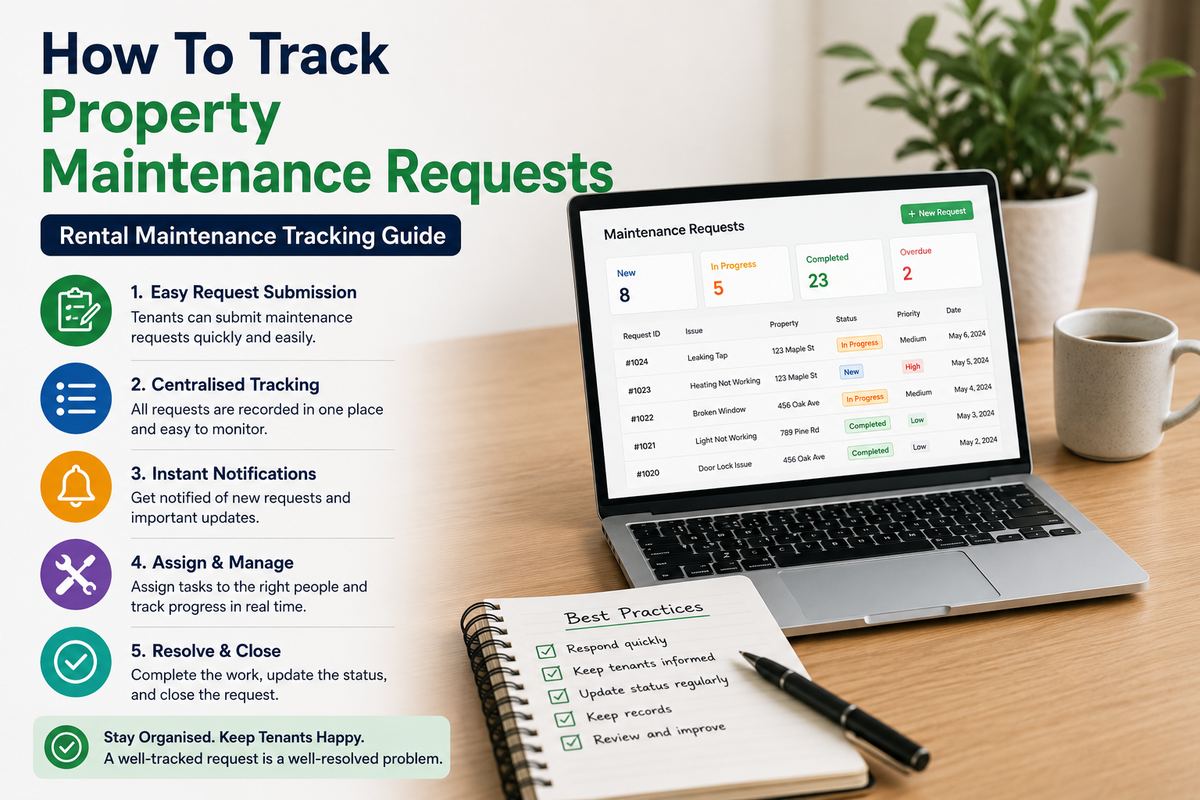
How To Track Property Maintenance Requests | Rental Maintenance Tracking Guide | Setli

Jun 07, 2026

4 min read
Managing property maintenance requests can quickly become overwhelming without proper organisation.
Whether you manage a rental property, shared house, or multiple tenants, maintenance issues are a normal part of rental management.
The challenge is not only fixing the problem. It is also keeping each request organised, visible, and properly tracked from start to finish.
Without a clear system, maintenance requests can easily become lost, delayed, or forgotten.
Why Maintenance Tracking Matters
Good maintenance tracking helps improve communication, repair visibility, response times, tenant satisfaction, property organisation, and maintenance history.
It also reduces confusion around who reported the issue, what progress has been made, whether work has been completed, and what problems are still unresolved.
The more organised the maintenance process is, the easier rental management becomes for everyone involved.
Common Problems With Manual Maintenance Tracking
Many landlords, hosts, and shared households still manage maintenance requests manually.
This often means relying on text messages, screenshots, emails, spreadsheets, verbal conversations, and group chats.
These methods may work for small issues, but they can become messy over time.
Common problems include:
- forgotten requests
- delayed repairs
- unclear communication
- missing maintenance history
- repeated follow-ups
- confusion over responsibilities
- difficulty tracking completed work
Without organised systems, maintenance management can quickly become stressful for both tenants and hosts.
Centralise Maintenance Requests
One of the best ways to improve maintenance organisation is to keep all requests in one place.
Centralised maintenance tracking gives everyone better visibility over:
- open requests
- pending repairs
- completed work
- urgent issues
- recurring problems
- repair progress
When maintenance requests are kept in one system, it becomes easier to manage repairs and reduce confusion.
It also helps tenants, hosts, and property managers stay aligned on what needs to happen next.
Use Clear Maintenance Statuses
Simple status tracking helps reduce unnecessary follow-up.
Instead of tenants needing to ask repeatedly for updates, clear maintenance statuses show where each request currently stands.
Common maintenance statuses may include:
- pending
- in progress
- resolved
- declined
This makes it easier for everyone to understand whether a repair has been acknowledged, is being organised, or has already been completed.
Clear status visibility can make maintenance management feel more professional and less stressful.
Keep Maintenance Communication Organised
Good communication is one of the most important parts of maintenance management.
Each maintenance request should clearly explain the issue, location, urgency, photos if available, and any important repair details.
The more information provided at the start, the easier it becomes to assess the issue and arrange the right repair.
Organised communication also helps avoid repeated messages, missing details, and confusion about what has already been discussed.
Maintain A Repair History
Maintenance history becomes more valuable over time.
Keeping repair records organised can help with:
- recurring problems
- future repairs
- property inspections
- tenant communication
- budgeting
- maintenance planning
- dispute resolution
For example, if the same issue keeps happening, a clear maintenance history can help identify whether a bigger repair is needed.
Having organised records also improves accountability and gives hosts better visibility over the condition of the property.
Respond To Maintenance Requests Promptly
Delayed communication often creates unnecessary frustration.
Even if a repair cannot happen immediately, providing an update helps tenants know the issue has been received and is being managed.
A simple acknowledgement can make a big difference.
It helps tenants understand that the request has been seen, repairs are being organised, and progress is being tracked.
Clear communication improves the overall rental experience and reduces avoidable tension.
Why Digital Maintenance Tracking Is Becoming More Important
Rental management is becoming more digital.
Tenants, hosts, landlords, and property managers increasingly expect organised maintenance systems, digital status tracking, repair visibility, easier communication, and accessible maintenance history.
Digital maintenance tracking helps reduce manual follow-ups and keeps important information easier to find.
It also supports better property management by keeping maintenance records connected to the rental or household arrangement.
How Setli Helps Simplify Maintenance Tracking
Setli is being developed to help simplify rental and shared living management.
The platform is designed to support:
- maintenance request tracking
- repair status updates
- communication visibility
- maintenance history
- household organisation
- rent tracking
- rental management
Setli’s goal is to improve transparency, reduce stress, and make rental management easier for tenants, hosts, landlords, and shared households.
Final Thoughts
Tracking property maintenance requests does not need to become stressful or disorganised.
With clear systems, organised communication, and proper maintenance visibility, repairs become easier to manage from start to finish.
The easier it is to track requests, updates, and maintenance history, the smoother rental management becomes overall.
As rental management continues moving online, tools that simplify maintenance tracking and household organisation are becoming increasingly valuable.