
 sign up
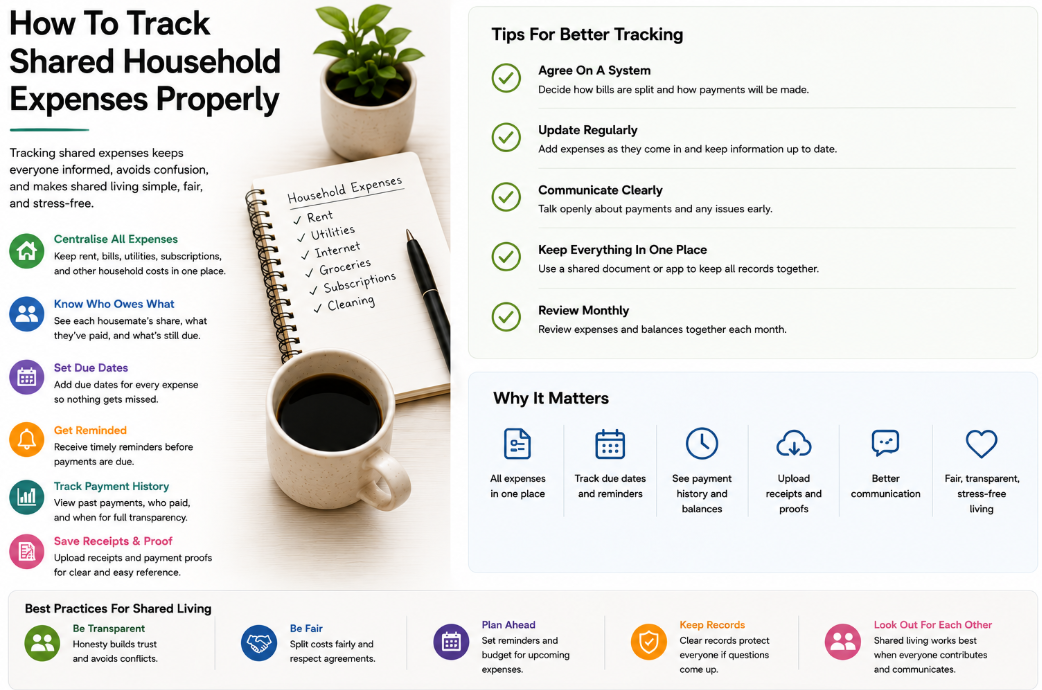
How To Track Shared Household Expenses Properly | Setli

Jun 27, 2026

5 min read
Tracking shared household expenses can quickly become confusing.
At first, it may seem easy.
One person pays the bill, everyone transfers their share, and the household moves on.
But over time, expenses can build up.
There may be rent, electricity, water, internet, subscriptions, groceries, cleaning supplies, repairs, or other shared costs.
If these are not tracked properly, housemates may forget what they owe, who has paid, and which expenses are still outstanding.
That is why shared households need a clear way to track expenses from the start.
Why Expense Tracking Matters
Shared households often involve multiple people paying different amounts at different times.
Without a proper system, it becomes easy for payments to be missed or misunderstood.
Poor expense tracking can lead to:
late payments
forgotten bills
awkward reminders
unclear amounts
double payments
missing records
household arguments
confusion over who paid what
A clear expense tracking system helps everyone understand their responsibilities.
It also makes shared living feel more organised and fair.
Start With The Main Household Costs
The first step is to list the main expenses in the household.
These may include:
rent
electricity
water
gas
internet
streaming services
cleaning supplies
household items
garden maintenance
repairs
shared subscriptions
Once all expenses are listed, it becomes easier to see what needs to be tracked regularly.
Some costs may happen every week.
Others may happen monthly, quarterly, or only when needed.
Separate Rent From Other Bills
Rent is usually the largest and most important household payment.
It should be tracked clearly and separately from smaller bills and expenses.
This helps avoid confusion between:
rent payments
utility bills
shared subscriptions
one-off household costs
maintenance expenses
extra charges
When everything is mixed together, it can become harder to understand what each person has paid.
Keeping rent and bills clearly organised helps create better records.
Agree On How Expenses Are Split
Not every household splits expenses the same way.
Some households split everything equally.
Others split costs based on room, usage, number of people, or household agreement.
Examples may include:
equal split between all housemates
different rent amounts for different rooms
couples paying a larger share
room-specific expenses
custom bill splits
owner-occupier arrangements
The most important thing is that everyone understands and agrees on the split before payments are due.
Clear agreements reduce disputes later.
Record Due Dates
Every shared expense should have a clear due date.
This helps everyone know when payments are expected.
Due dates are important for:
rent
utility bills
internet
subscriptions
shared expenses
maintenance costs
one-off payment requests
Without due dates, people may delay payments or forget them entirely.
A due date gives the household a clear expectation.
Track Who Has Paid
A good expense tracking system should show who has paid and who has not.
This is one of the biggest problems in shared houses.
If payments are only tracked through memory, screenshots, or group chats, mistakes can happen.
A clear payment record helps answer questions like:
who has paid?
who still owes money?
when was the payment made?
what was the payment for?
was the payment late?
This helps reduce confusion and makes reminders easier.
Keep Payment History
Payment history is important for both hosts and tenants.
Over time, it creates a record of what has happened.
This can be useful when checking:
past rent payments
bill contributions
shared expense payments
late payments
missed payments
payment dates
household records
Without payment history, people may disagree about what has already been paid.
Good records protect everyone.
Avoid Relying Only On Group Chats
Group chats are useful for communication, but they are not always reliable for expense tracking.
Messages can get buried.
Screenshots can be missed.
People may forget to reply.
Important details may be spread across multiple conversations.
A group chat may show that someone talked about a bill, but it does not always create a clear payment record.
For shared expenses, it is better to use a system that keeps amounts, due dates, and payment status organised.
Use Reminders
Reminders can help reduce missed payments.
In shared households, people may not intentionally avoid paying.
They may simply forget.
Reminders are useful for:
upcoming rent
overdue bills
shared expenses
recurring payments
one-off costs
payment deadline changes
A reminder system also reduces the need for one person to constantly chase everyone else.
This can make household communication less awkward.
Track Recurring And One-Off Expenses
Not all expenses are the same.
Some happen regularly.
Others only happen once.
Recurring expenses may include:
rent
internet
electricity
water
gas
subscriptions
One-off expenses may include:
repairs
replacement items
cleaning products
moving costs
maintenance
shared household purchases
Both types should be tracked clearly.
Recurring expenses need schedules.
One-off expenses need clear payment requests and records.
Keep Records When People Move In Or Out
Expense tracking becomes more important when housemates change.
If someone moves in or out, the household may need to work out partial payments.
This may include:
part-month rent
partial bills
final expenses
outstanding payments
security deposit records
payment history
new tenant responsibilities
Clear expense records make these situations easier to manage.
Without records, it can be difficult to work out what is fair.
How Setli Helps Track Shared Expenses
Setli is designed to help with rent, bills, shared expenses, reminders, payment history, and household payment tracking.
For shared households, Setli can help keep payment information clearer and more organised.
Hosts can create expenses, track who owes what, manage payment requests, and keep records.
Tenants can see what is due, when it is due, and what has already been paid.
This helps reduce confusion around shared household expenses.
Why One Place Matters
Shared expenses become harder to manage when information is spread across different places.
For example:
rent in bank transfers
bills in group chats
receipts in emails
reminders in text messages
records in spreadsheets
payment proof in screenshots
This makes it harder to see the full picture.
Tracking everything in one place makes household payments easier to understand.
Final Thoughts
Tracking shared household expenses properly helps reduce confusion, missed payments, and awkward conversations.
Every shared household should understand what expenses exist, how they are split, when they are due, and who has paid.
Clear records make shared living easier for everyone.
Setli helps simplify this process by giving households a clearer way to manage rent, bills, shared expenses, reminders, and payment history in one place.