 sign up
Urgent vs Non-Urgent Maintenance In Rental Properties | Setli

Jun 27, 2026

5 min read
Not every maintenance issue needs the same response time.
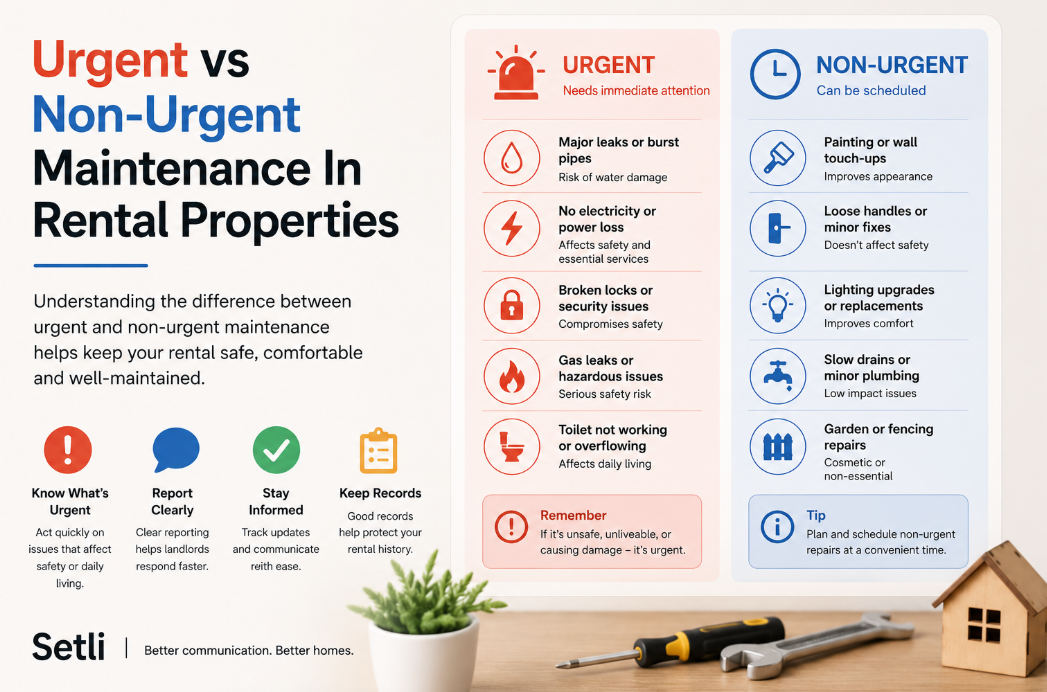
Some repairs may need urgent attention because they affect safety, security, water, electricity, or the basic use of the property.
Other issues may still be important, but they can usually be scheduled as normal maintenance.
Understanding the difference between urgent and non-urgent maintenance helps landlords, hosts, and tenants communicate more clearly.
It also helps reduce confusion around what needs immediate attention and what can be planned properly.
Why Maintenance Priority Matters
Maintenance requests can become stressful when expectations are unclear.
A tenant may think an issue needs immediate attention.
A landlord may see it as something that can be scheduled later.
Without clear communication, both sides can become frustrated.
Maintenance priority helps everyone understand:
how serious the issue is
how quickly it needs attention
what information should be provided
whether temporary action is needed
what updates should be expected
Clear priority makes the repair process easier to manage.
What Is Urgent Maintenance?
Urgent maintenance usually involves issues that may affect safety, security, essential services, or serious property damage.
Examples may include:
major water leaks
electrical hazards
security issues
loss of essential services
serious plumbing problems
dangerous damage
blocked essential facilities
major access issues
These types of issues should be reported as soon as possible.
The faster they are reported, the easier it is for the landlord or host to review the situation and organise the next step.
What Is Non-Urgent Maintenance?
Non-urgent maintenance still matters, but it may not need immediate action.
These issues can usually be scheduled and managed through normal repair processes.
Examples may include:
loose handles
minor cosmetic damage
small wear and tear items
sticking doors
minor appliance issues
small cracks
general maintenance requests
non-critical fixture problems
Non-urgent does not mean unimportant.
It simply means the issue may not require immediate response.
It should still be reported and tracked properly.
Report Urgent Issues Quickly
Tenants should report urgent issues as soon as they notice them.
A quick report should include:
what happened
where the issue is located
when it started
whether anyone is at risk
whether damage is getting worse
photos or videos if safe to provide
Clear information helps the landlord understand what is happening and respond appropriately.
If there is immediate danger, tenants should follow the appropriate emergency process for their situation.
Report Non-Urgent Issues Clearly
Non-urgent issues should also be reported clearly.
Even small maintenance problems can become worse if ignored for too long.
A useful report may include:
the issue description
the location
when it was first noticed
whether it is getting worse
photos if available
whether it affects normal use
This helps landlords plan repairs and keep maintenance records updated.
Do Not Ignore Small Problems
Some tenants may avoid reporting small issues because they do not want to bother the landlord.
But small issues can become larger problems over time.
For example:
a small leak may cause water damage
a loose handle may break completely
a sticking door may become harder to close
a minor appliance fault may become worse
a small crack may expand
Reporting issues early helps landlords review the problem before it becomes more serious.
Landlords Should Acknowledge Requests
Whether a request is urgent or non-urgent, it should be acknowledged.
This helps tenants know the issue has been received.
A simple acknowledgement may include:
“Thanks, I’ve received this request.”
“I’ll review this and update you.”
“I’ve noted the issue and will organise the next step.”
“I understand this may be urgent and will look into it.”
Acknowledgement helps reduce uncertainty and repeated follow-ups.
Clear Updates Reduce Confusion
Maintenance requests are easier to manage when updates are provided.
Updates may include:
request received
issue being reviewed
contractor contacted
repair scheduled
waiting for parts
repair completed
follow-up needed
Even when a repair cannot happen immediately, updates help tenants understand what is happening.
This improves communication and reduces frustration.
Keep A Record Of Maintenance Priority
Maintenance records should show whether an issue is urgent, non-urgent, or still being reviewed.
This helps landlords manage requests properly.
A good maintenance record may include:
issue description
priority level
reported date
tenant or room affected
photos
status updates
repair notes
completion date
This makes it easier to review what happened later.
Avoid Confusion Around Expectations
Some maintenance disagreements happen because expectations were never discussed clearly.
Tenants may expect immediate action on every issue.
Landlords may not understand why a tenant sees an issue as urgent.
A clear system helps both sides understand the repair status and priority.
This reduces unnecessary tension.
How Setli Helps With Maintenance Tracking
Setli is designed to help landlords, hosts, tenants, and shared households manage maintenance requests more clearly.
Maintenance requests can be tracked alongside rent, bills, reminders, payment history, and household organisation.
This helps keep important rental information in one place.
Tenants can raise maintenance issues, and landlords can keep clearer visibility over reported requests, updates, and maintenance history.
Why Organised Maintenance Helps Everyone
Organised maintenance tracking helps both landlords and tenants.
It helps tenants know their request has been recorded.
It helps landlords stay on top of reported issues.
It helps reduce missed updates, repeated questions, and confusion.
Clear maintenance tracking makes the repair process easier to manage from start to finish.
Final Thoughts
Urgent and non-urgent maintenance both matter, but they should not always be handled the same way.
Urgent issues may need faster attention because they can affect safety, security, essential services, or serious property damage.
Non-urgent issues can usually be scheduled, but they should still be reported and tracked clearly.
Setli helps simplify maintenance communication by keeping requests, updates, reminders, rent, bills, and household records organised in one place.
Clear maintenance tracking helps landlords, hosts, tenants, and shared households stay informed and manage repairs with less confusion.