
 sign up
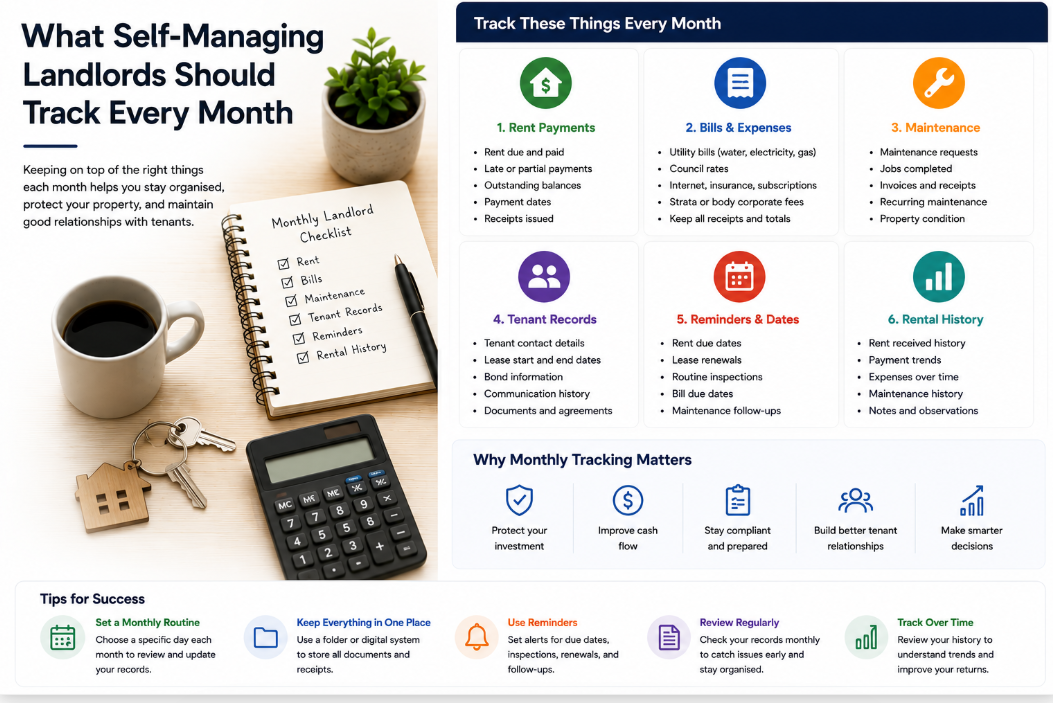
What Self-Managing Landlords Should Track Every Month | Setli

Jun 27, 2026

5 min read
Self-managing a rental property can save money, but it also creates responsibility.
When there is no property manager involved, the landlord or host needs to stay on top of the important details.
This includes rent, bills, maintenance, tenant communication, reminders, records, and move-in or move-out changes.
The best way to avoid confusion is to track key rental information every month.
A simple monthly check can help landlords stay organised and reduce problems before they become stressful.
Why Monthly Tracking Matters
Rental management involves repeated tasks.
Rent is due regularly.
Bills arrive throughout the month.
Maintenance issues may be raised.
Tenants may ask questions.
Payment records need to stay updated.
If these details are not checked regularly, small issues can build up.
Monthly tracking helps landlords understand:
what has been paid
what is overdue
what bills are coming up
what maintenance is unresolved
what records need updating
what tenant changes may be needed
This makes rental management easier to control.
1. Rent Payments
Rent is the first thing self-managing landlords should track every month.
A rent record should show:
who has paid
who has not paid
how much was paid
when it was paid
which rent period it covers
whether any rent is overdue
whether any payment changes apply
Rent tracking helps landlords avoid missed payments and confusion.
It also gives tenants clearer visibility over their payment history.
2. Upcoming Rent
It is also important to look ahead.
Landlords should check upcoming rent payments before they are due.
This helps identify:
which tenants have rent due soon
which rent cycles are coming up
whether reminders need to be sent
whether any payment date changes apply
whether a tenant is moving out soon
Tracking upcoming rent makes it easier to stay ahead instead of reacting after a payment is missed.
3. Bills And Shared Expenses
Many rental arrangements involve bills or shared expenses.
This is common in room rentals, shared houses, and co-living arrangements.
Landlords may need to track:
electricity
water
gas
internet
cleaning supplies
shared subscriptions
maintenance costs
other household expenses
Each bill should show the amount, due date, split arrangement, and payment status.
This helps reduce confusion around who owes what.
4. Overdue Payments
Overdue payments should be checked every month.
This may include overdue rent, unpaid bills, or outstanding shared expenses.
A good overdue record should show:
who owes money
what the payment relates to
how much is overdue
when it was due
whether reminders were sent
whether any extension was agreed
Clear overdue tracking helps landlords manage issues early.
It also reduces the chance of unpaid amounts building up unnoticed.
5. Payment History
Payment history should be reviewed and kept up to date.
This includes:
completed rent payments
completed bill payments
late payments
missed payments
payment dates
amounts paid
outstanding balances
Payment history is useful for both landlords and tenants.
It helps reduce disputes and creates clearer rental records over time.
6. Maintenance Requests
Maintenance should be reviewed regularly.
Even small maintenance issues can become bigger problems if they are forgotten.
Landlords should track:
what was reported
who reported it
when it was reported
which property or room it relates to
whether it has been resolved
what contractor or action is needed
any related cost
Clear maintenance tracking helps landlords stay responsive and organised.
7. Tenant Communication
Important tenant communication should be recorded.
This may include messages about:
rent changes
payment extensions
bill disputes
maintenance updates
move-out notices
house rules
inspection times
shared responsibilities
Not every conversation needs to become complicated.
But important rental decisions should be recorded clearly so there is less confusion later.
8. Move-In And Move-Out Dates
Self-managing landlords should track tenant start and end dates.
This helps with:
final rent
final bills
security deposit handling
room availability
new tenant invites
payment history
future rent schedules
outstanding amounts
Move-ins and move-outs are easier to manage when key dates and payment records are clear.
9. Room Or Property Status
For landlords managing rooms or shared properties, room status is important.
Each room may be:
occupied
vacant
available soon
pending move-in
pending move-out
waiting for payment
being prepared for a new tenant
Tracking room status helps landlords plan ahead and avoid missed rental opportunities.
10. Records And Documents
Landlords should keep important rental records organised.
This may include:
payment history
receipts
expense records
tenant details
maintenance notes
move-in records
move-out records
notices
security deposit records
Clear records make rental management easier and help reduce confusion if questions come up later.
Why Spreadsheets Can Become Difficult
Some self-managing landlords start with spreadsheets.
This can work for a small setup.
But spreadsheets can become harder to maintain as more tenants, rooms, bills, and payment changes are added.
Common problems include:
manual updates
missed reminders
outdated information
unclear payment status
no automatic tenant visibility
records spread across other apps
A clearer system can reduce manual admin and make information easier to access.
How Setli Helps Self-Managing Landlords
Setli is designed to help with rent, bills, shared expenses, reminders, payment history, maintenance visibility, and household payment tracking.
For self-managing landlords and hosts, Setli helps keep important rental information organised in one place.
Landlords can track rent, manage bills, view payment status, record history, and reduce manual reminders.
Tenants can see what is due, what has been paid, and what remains outstanding.
This helps make rental management clearer for both sides.
Keep The Monthly Check Simple
A monthly rental check does not need to be complicated.
The main questions are:
has rent been paid?
are any payments overdue?
are bills up to date?
are maintenance requests resolved?
are tenant records current?
are any move-ins or move-outs coming up?
are records and documents organised?
If these basics are checked regularly, self-management becomes much easier.
Final Thoughts
Self-managing landlords need to stay organised.
Every month, it is worth checking rent payments, upcoming rent, bills, overdue amounts, maintenance, tenant communication, records, and property status.
Without a clear system, these tasks can become stressful and easy to miss.
Setli helps landlords, hosts, tenants, and shared households manage rent, bills, reminders, shared expenses, maintenance visibility, and payment history in one place.
For self-managing landlords, clear monthly tracking can make rental management easier, more organised, and less stressful.