
 sign up
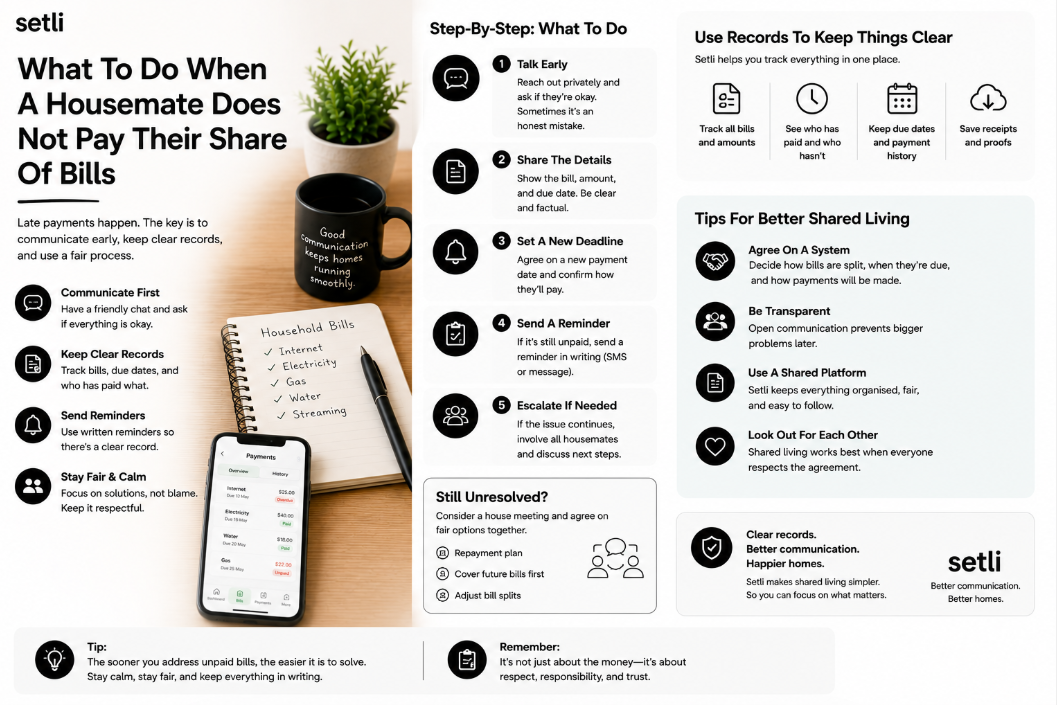
What To Do When A Housemate Does Not Pay Their Share Of Bills | Setli

Jun 27, 2026

6 min read
Shared bills can become stressful when one housemate does not pay their share.
At first, it may feel like a small issue.
Someone forgets to transfer money.
Someone says they will pay later.
Someone misses a message in the group chat.
But if it keeps happening, the problem can quickly create tension in the household.
One person may feel like they are always chasing payments, while another may feel embarrassed or defensive.
That is why it helps to have a clear process for managing unpaid bills in a shared house.
Start With A Clear Conversation
The first step is usually a simple conversation.
Not every missed payment is intentional.
A housemate may have forgotten, missed the reminder, misunderstood the amount, or been waiting for payday.
Try to keep the conversation calm and practical.
Focus on the payment, not the person.
For example:
“The electricity bill was due yesterday. Your share is still outstanding. Can you please confirm when you can pay it?”
This keeps the message clear without making it personal.
Check The Amount First
Before raising the issue, make sure the amount is correct.
Bill splitting mistakes can happen.
Check:
the total bill amount
how the bill was split
who was included in the split
whether anyone moved in or out
whether the payment was already made
whether the due date was clear
This helps avoid unnecessary arguments.
If the amount is wrong, fix it before asking someone to pay.
Keep Records Of What Is Owed
Records are important when dealing with unpaid bills.
Without records, conversations can quickly become confusing.
A clear record should show:
what the bill was for
the total amount
each person’s share
the due date
who has paid
who has not paid
when reminders were sent
This makes the situation easier to manage because everyone can see the same information.
Avoid Relying Only On Group Chats
Group chats are useful for general household communication.
But they are not always the best place to manage unpaid bills.
Messages can get buried.
People may forget to reply.
Screenshots can be missed.
Someone may say they paid, but there may be no clear record of what the payment was for.
For household bills, it is better to keep payment details in a clear tracking system.
Use Reminders Before It Becomes Awkward
Reminders can help prevent small issues from becoming bigger problems.
Many people do not avoid bills on purpose.
They simply forget.
A reminder before the due date can be much easier than chasing someone after the payment is late.
Reminders can be useful for:
upcoming bills
overdue bills
shared expenses
rent contributions
one-off household costs
recurring payments
This reduces the pressure on one housemate to constantly follow up manually.
Agree On Payment Expectations
Shared houses should agree on payment expectations early.
This may include:
when bills are due
how bills are split
how reminders are handled
what happens if someone pays late
whether one person pays upfront
whether late payment needs to be discussed
Clear expectations make it easier to deal with unpaid bills because everyone already understands the rules.
Without expectations, each missed payment can turn into a new argument.
Do Not Let It Build Up
One unpaid bill is easier to manage than several unpaid bills.
If the issue continues, it is better to address it early.
Allowing unpaid amounts to build up can make the situation harder for everyone.
The housemate who owes money may feel overwhelmed.
The housemate who paid upfront may feel frustrated.
The household may lose trust.
Clear tracking and early communication help prevent the issue from growing.
Be Fair But Firm
It is important to be respectful, but also clear.
If someone owes money for a shared bill, the household needs a clear answer.
A fair approach may include:
confirming the amount
checking whether there was a mistake
asking for a payment date
recording the outstanding amount
following up if the payment is missed again
This keeps the situation practical.
The goal is not to create conflict.
The goal is to make sure shared costs are paid fairly.
Consider Payment Extensions If Needed
Sometimes a housemate may genuinely need more time.
In that case, a payment extension can be discussed.
This should still be recorded clearly.
For example:
how much is owed
the new due date
who agreed to the extension
whether the payment relates to rent, bills, or another expense
A clear extension avoids confusion later.
It also prevents the household from relying on vague promises.
When It Becomes A Repeated Problem
If a housemate regularly does not pay their share of bills, the household may need a stronger process.
This could include:
written payment expectations
clearer bill tracking
automated reminders
recorded due dates
less reliance on one person paying upfront
household discussion about responsibilities
Repeated unpaid bills can damage trust.
A shared house works better when payment responsibilities are visible and organised.
How Setli Helps With Unpaid Bills
Setli is designed to help with rent, bills, shared expenses, reminders, payment history, and household payment tracking.
For shared households, Setli can help keep bill payments clearer.
Hosts can create expenses, track who owes what, manage due dates, and keep payment records.
Tenants can see what is due, when it is due, and what has already been paid.
This helps reduce confusion around unpaid bills and makes reminders easier to manage.
Why Payment History Matters
Payment history helps everyone understand what has happened.
It can show:
which bills were created
which payments were completed
which payments were late
which amounts are still outstanding
when reminders or payment requests were made
This can be useful when there is disagreement about what has been paid.
Clear records reduce the need to rely on memory or screenshots.
Keep Household Payments Organised
Unpaid bills are often harder to manage when everything is scattered.
For example:
bill photos in group chats
payment proof in bank apps
reminders in text messages
amounts in spreadsheets
receipts in emails
This makes it harder to know what is actually outstanding.
Keeping household payments organised in one place can make shared living less stressful.
Final Thoughts
When a housemate does not pay their share of bills, the best approach is to stay calm, check the amount, communicate clearly, and keep records.
Most problems become worse when there is no system.
Clear due dates, payment history, reminders, and shared expectations can reduce confusion and awkward conversations.
Setli helps shared households manage rent, bills, reminders, payment tracking, and shared expenses in one place, making it easier to see what is due and what has already been paid.