 sign up
When Should Tenants Report Maintenance Issues? | Rental Maintenance Guide | Setli

Jun 07, 2026

4 min read
Maintenance issues are a normal part of renting and shared living.
From leaking taps and faulty appliances to electrical problems, damaged fixtures, mould, or broken locks, knowing when to report maintenance issues is important for both tenants and hosts.
Many small problems become much worse when they are ignored for too long.
The earlier maintenance issues are identified and communicated, the easier they are usually to resolve.
Why Reporting Maintenance Early Matters
One of the biggest mistakes tenants can make is waiting too long before reporting a problem.
Small maintenance issues can quickly turn into:
- expensive repairs
- property damage
- safety hazards
- larger household disruptions
- disputes over responsibility
Early communication helps reduce long-term problems and improves the overall rental experience for everyone involved.
It also gives hosts, landlords, or property managers a better chance to organise repairs before the issue becomes more serious.
Common Maintenance Issues Tenants Should Report
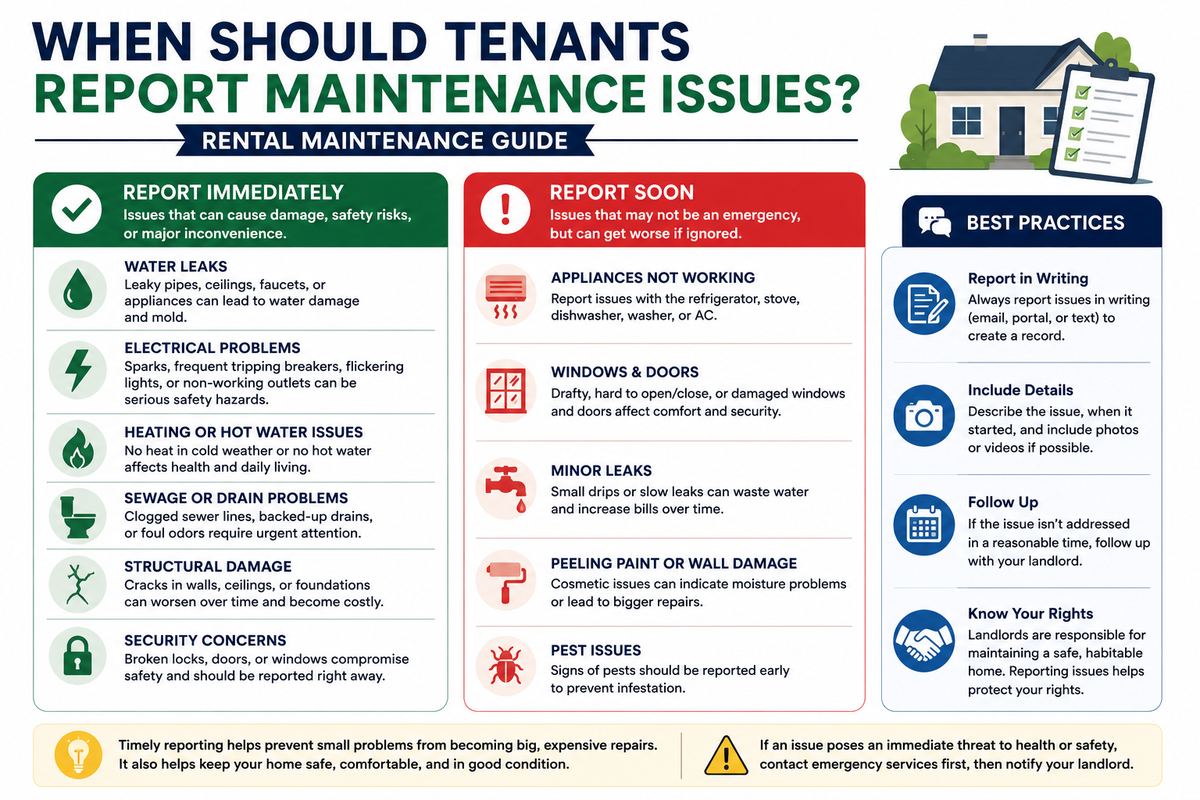
Tenants should generally report maintenance issues as soon as they notice them.
Common issues that should be reported include:
- plumbing leaks
- blocked drains
- electrical faults
- broken appliances
- mould growth
- damaged fixtures
- heating and cooling problems
- water damage
- security concerns
- damaged locks or doors
- utility problems affecting the property
Even smaller problems are often worth reporting before they become more serious.
A small leak, loose fitting, or minor appliance issue may seem manageable at first, but it can become harder and more expensive to fix if left too long.
Urgent Maintenance Issues
Some maintenance issues should be reported immediately.
Urgent issues may include:
- electrical dangers
- gas leaks
- flooding
- major water leaks
- security risks
- broken locks
- severe appliance faults
- dangerous structural issues
- serious safety hazards
Urgent repairs often require immediate communication to reduce safety risks and prevent further property damage.
If the issue could affect safety, security, or cause serious damage to the property, it should be raised as soon as possible.
Why Clear Communication Is Important
Maintenance requests are easier to manage when the information is clear from the beginning.
Helpful details may include:
- a clear description of the issue
- the location of the problem
- when the issue started
- photos if available
- urgency level
- any changes since the issue was first noticed
Clear communication helps reduce misunderstandings and can make the repair process faster and easier.
It also helps hosts or property managers understand what action may be required.
Keep Maintenance Requests Organised
Many households still manage maintenance requests manually through text messages, screenshots, emails, group chats, and verbal conversations.
Over time, this can create confusion around:
- what was reported
- when it was reported
- who reported it
- whether repairs were completed
- repair progress
- maintenance history
Keeping maintenance requests organised helps improve visibility and accountability.
When requests are tracked clearly, tenants and hosts can better understand what has been raised, what is being worked on, and what has already been resolved.
Why Tenants Should Avoid Ignoring Problems
Ignoring maintenance issues can create larger problems later.
Minor problems often become more expensive, more disruptive, and more difficult to repair.
For example, a small leak may lead to water damage, mould, or damage to flooring and walls if it is not reported early.
Early reporting helps protect both the property and the household living environment.
It also helps reduce confusion about when the issue started and whether it could have been prevented.
Why Digital Maintenance Tracking Is Becoming More Important
Rental management is becoming more digital.
Tenants, hosts, landlords, and property managers increasingly expect organised maintenance requests, repair visibility, status tracking, easier communication, maintenance history, and simplified rental management.
Digital maintenance tracking helps reduce scattered messages and makes important repair information easier to find.
It also creates a clearer record of maintenance activity over time.
How Setli Helps Simplify Maintenance Management
Setli is being developed to help simplify rental and shared living management.
The platform is designed to support:
- maintenance request tracking
- repair status updates
- communication visibility
- maintenance history
- household organisation
- rent tracking
- rental management
Setli’s goal is to improve transparency, reduce confusion, and simplify communication between tenants and hosts.
Final Thoughts
Tenants should report maintenance issues as early as possible.
Clear communication and organised maintenance systems help reduce stress, prevent larger problems, and improve the overall rental experience.
The easier it becomes to track and manage maintenance requests, the smoother rental management becomes for tenants, hosts, landlords, and shared households.