
 sign up
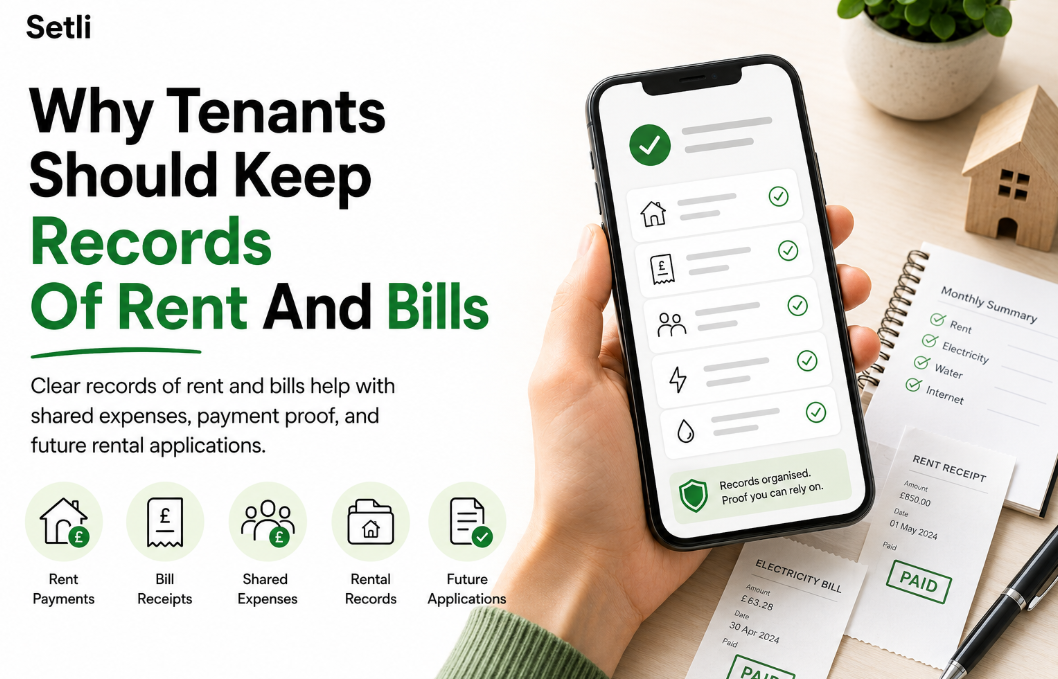
Why Tenants Should Keep Records Of Rent And Bills | Setli

Jun 27, 2026

5 min read
Tenants should keep clear records of rent and bills.
When everything is going smoothly, records may not seem important.
Rent is paid.
Bills are handled.
Housemates understand what is owed.
The landlord or host knows what has been paid.
But when there is a missed payment, a move-out, a bill dispute, or a future rental application, clear records can become very useful.
Keeping records helps tenants understand their own payment history and avoid confusion later.
Why Tenant Records Matter
Rental arrangements usually involve repeated payments.
These may include:
rent
electricity
water
gas
internet
shared expenses
household supplies
one-off bills
payment extensions
security deposit records
If these records are not organised, tenants may need to search through bank apps, screenshots, group chats, emails, and old messages later.
This can become stressful and time-consuming.
Rent Records Show Payment History
Rent is usually the most important rental payment.
Tenants should keep records showing:
how much rent was due
when rent was due
when rent was paid
which rental period it covered
whether rent was paid on time
whether anything was overdue
This helps create a clear payment history over time.
It can also help tenants understand their own rental record better.
Bill Records Reduce Confusion
Bills can become confusing in shared households.
Tenants may contribute to:
electricity
water
gas
internet
cleaning supplies
shared subscriptions
household expenses
If these payments are not tracked, it can become difficult to remember what was paid and what is still outstanding.
Clear bill records help tenants avoid paying twice, missing payments, or misunderstanding shared costs.
Records Help During Move-Out
Move-out periods can create extra questions.
A tenant may need to confirm:
final rent
final bills
outstanding payments
security deposit details
shared expenses
payment history
move-out dates
If records are unclear, these conversations can become stressful.
Having organised records helps make the move-out process easier to manage.
Records Can Support Future Applications
Tenants may need rental history when applying for a new property.
This is especially true if they are renting privately, renting a room, or building rental history for the first time.
Clear records can help show:
regular rent payments
on-time payments
bill contributions
rental timeline
payment consistency
responsible household behaviour
Payment history is not the only part of a rental application, but it can help support a tenant’s overall record.
Records Help Private Renters
Private renters may not always have formal property manager records.
This can include people renting from:
private landlords
room hosts
housemates
family members
shared households
co-living arrangements
Even if the tenant has paid reliably, the records may be scattered or informal.
Keeping rent and bill records organised can help private renters show their payment history more clearly.
Records Help Avoid Disputes
Disputes often happen when people remember payments differently.
For example:
“I already paid that bill.”
“That payment was for rent.”
“I thought the internet was included.”
“I paid my share last week.”
“That was for electricity, not water.”
Clear records make these conversations easier.
Instead of relying on memory, tenants and hosts can check the payment history.
Receipts Are Useful
Receipts and payment proof can support tenant records.
This may include:
rent receipts
online payment confirmations
bank transfer records
bill receipts
shared expense confirmations
payment summaries
Receipts are most useful when they are organised and easy to find.
If they are scattered across different apps, they may be harder to use later.
Keep Important Dates
Dates are important in rental records.
Tenants should try to keep records of:
rent due dates
payment dates
bill due dates
move-in dates
move-out dates
payment extension dates
shared expense dates
Dates help show the timeline of the rental arrangement.
This can be useful if there are questions about when something was due or paid.
Avoid Relying Only On Group Chats
Group chats are common in shared houses.
They are useful for communication, but they are not always good record systems.
Messages can get buried.
Amounts can be misunderstood.
Screenshots can be missed.
People may leave the chat.
Important payment details can become hard to find later.
A clearer record system is better for rent and bills.
Keep Records In One Place
Records are easier to use when they are kept together.
Instead of spreading information across:
bank apps
emails
screenshots
messages
spreadsheets
notes apps
tenants should try to keep payment records in one organised place.
This makes it easier to review payment history when needed.
How Setli Helps Tenants Keep Records
Setli is designed to help with rent, bills, shared expenses, reminders, payment history, and tenant records.
For tenants, Setli can help show what is due, what has been paid, and what payment history exists.
This can be especially useful for tenants renting rooms, living in shared houses, paying private hosts, or building their rental history over time.
Setli helps turn rent and bill payments into clearer records.
Why Tenant Visibility Matters
Tenants should be able to see their own payment information.
This helps them understand:
upcoming payments
completed payments
overdue amounts
bill contributions
shared expenses
payment history
rental records
Better visibility helps tenants stay organised and reduces confusion.
Final Thoughts
Tenants should keep records of rent and bills because payment history matters.
Clear records can help with move-outs, shared bills, private renting, future applications, and payment disputes.
Relying only on screenshots, bank transfers, group chats, or memory can become difficult over time.
Setli helps tenants, hosts, and shared households keep rent, bills, reminders, shared expenses, payment history, and tenant records organised in one place.
For tenants, better records can make rental history clearer, easier to track, and easier to use in the future.